Memaw’s Cathead Biscuits: The Ultimate Southern Comfort
There is a deeply comforting magic in pulling a hot skillet of massive, golden-brown biscuits from the oven. The name “cathead” comes from their impressive size—roughly the size of a cat’s head—and they are a beloved staple of traditional Southern kitchens.
Finding a recipe that delivers that authentic, pull-apart tenderness without requiring hours of labor can feel like a tall order. This method yields a beautifully soft, fluffy crumb with a crisp, buttery bottom that is perfect for sopping up gravy or slathering with jam.
This recipe matters because it relies on simple, everyday ingredients to create a spectacular, bakery-worthy side dish. It saves you from the frustration of dense, heavy dough by using a gentle mixing technique that guarantees reliable, melt-in-your-mouth comfort.
Ingredients
- 3 cups All-purpose flour (or White Lily self-rising flour, omitting baking powder and salt)
- 1 tablespoon Baking powder
- 1 teaspoon Salt
- 1/2 cup Unsalted butter, cold and cubed (or vegetable shortening for a traditional texture)
- 1 1/4 cups Buttermilk, cold (or regular milk mixed with 1 tablespoon white vinegar)
- 2 tablespoons Butter, melted (for brushing the finished tops)
Instructions
- Preheat your oven to 425°F and generously grease a large cast-iron skillet or round baking pan.
- Whisk the all-purpose flour, baking powder, and salt together in a large mixing bowl until evenly combined.
- Cut the cold, cubed butter into the dry ingredients using a pastry blender or your fingers until the mixture resembles coarse crumbs.
- Pour the cold buttermilk directly into the center of the flour mixture.
- Stir gently with a fork or wooden spoon just until a wet, shaggy dough forms; do not overmix.
- Turn the dough out onto a generously floured surface and gently pat it together without kneading.
- Pinch off large handfuls of dough and gently shape them into rustic, freeform rounds.
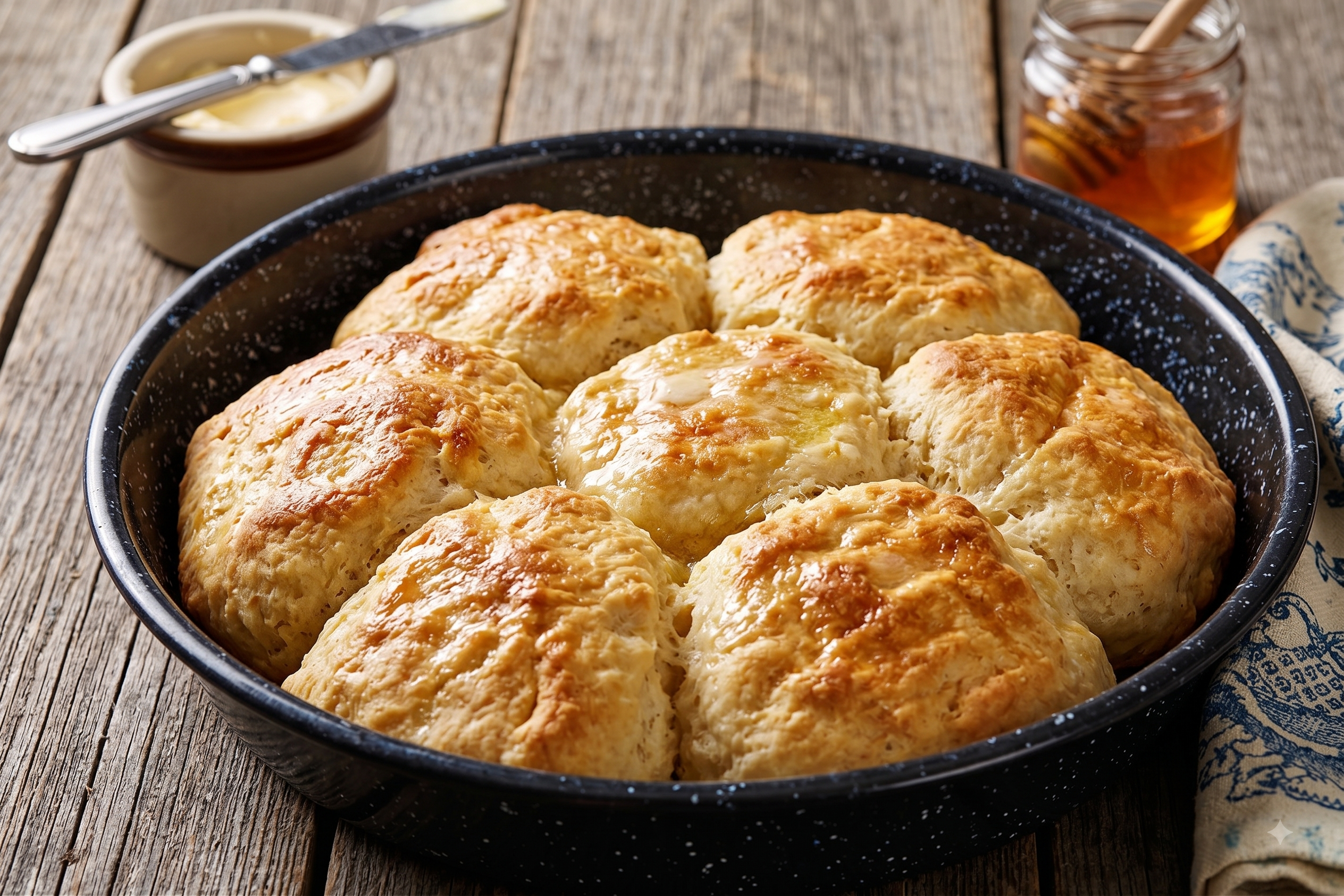
- Place the dough rounds into the prepared skillet, ensuring their edges touch. You can reference the file image_043716.jpg to see how snugly they should fit together.
- Bake for 15 to 20 minutes until the tops achieve a beautiful, golden-brown finish.
- Remove from the oven and immediately brush the hot tops with the melted butter before serving.
Why This Recipe Works
- Gentle Handling: By pinching off rustic rounds instead of rolling and cutting, you avoid overworking the gluten, ensuring a supremely tender crumb.
- Skillet Baking: A cast-iron skillet conducts heat evenly, creating a gorgeously crisp, golden crust on the bottom while the insides remain fluffy.
- Buttermilk Acidity: The acid in the buttermilk reacts with the baking powder, providing an incredible, towering lift and a subtle, nostalgic tang.
- Mutual Support: Packing the large biscuits closely together in the pan forces them to rise vertically, resulting in their signature, impressive height.
Tips for Best Results
- Keep everything cold: The secret to flaky layers is ensuring your butter and buttermilk remain as cold as possible until they hit the hot oven.
- Embrace the mess: Cathead biscuits are meant to look rustic and uneven, so avoid the temptation to roll them into perfectly smooth, uniform balls.
- Do not overmix: Stir the dough only until the liquid is absorbed. Overworking the batter is the most common cause of hard, heavy biscuits.
Variations & Substitutions
- Savory Cheese & Chive: Fold a cup of sharp cheddar cheese and a handful of chopped fresh chives into the dry ingredients before adding the buttermilk.
- Shortening Swap: For a truly old-school, ultra-tender texture, substitute the butter with an equal amount of cold vegetable shortening or lard.
- Sweet Glazed: Add a tablespoon of sugar to the dough and serve the warm biscuits drizzled generously with local honey.
- Dairy-Free Option: Use a high-quality plant-based butter alternative and an almond milk-vinegar mixture to easily accommodate dietary restrictions.
Frequently Asked Questions
How should I store these biscuits?
Store them in an airtight container at room temperature for up to two days, or refrigerate for up to a week. They reheat beautifully in a warm oven or toaster.
Can I make the dough ahead of time?
Yes, you can portion the biscuits into a skillet, cover tightly, and refrigerate overnight. Bake them straight from the fridge, adding a few extra minutes to the timer.
What if I don’t have buttermilk?
You can easily make a substitute by stirring one tablespoon of white vinegar or lemon juice into regular milk and letting it sit for five minutes before using.
Why did my biscuits turn out dense?
This usually happens if the butter was too warm when mixed, the dough was kneaded too heavily, or the baking powder was expired.
Whether you are serving them alongside a hearty breakfast gravy or enjoying them with a simple spread of fruit preserves, these massive biscuits are a comforting staple. We hope this rustic, buttery recipe brings a touch of warmth and heritage to your family table.